
 +965 2224 8361


Daily Economic Update
26.03.2026
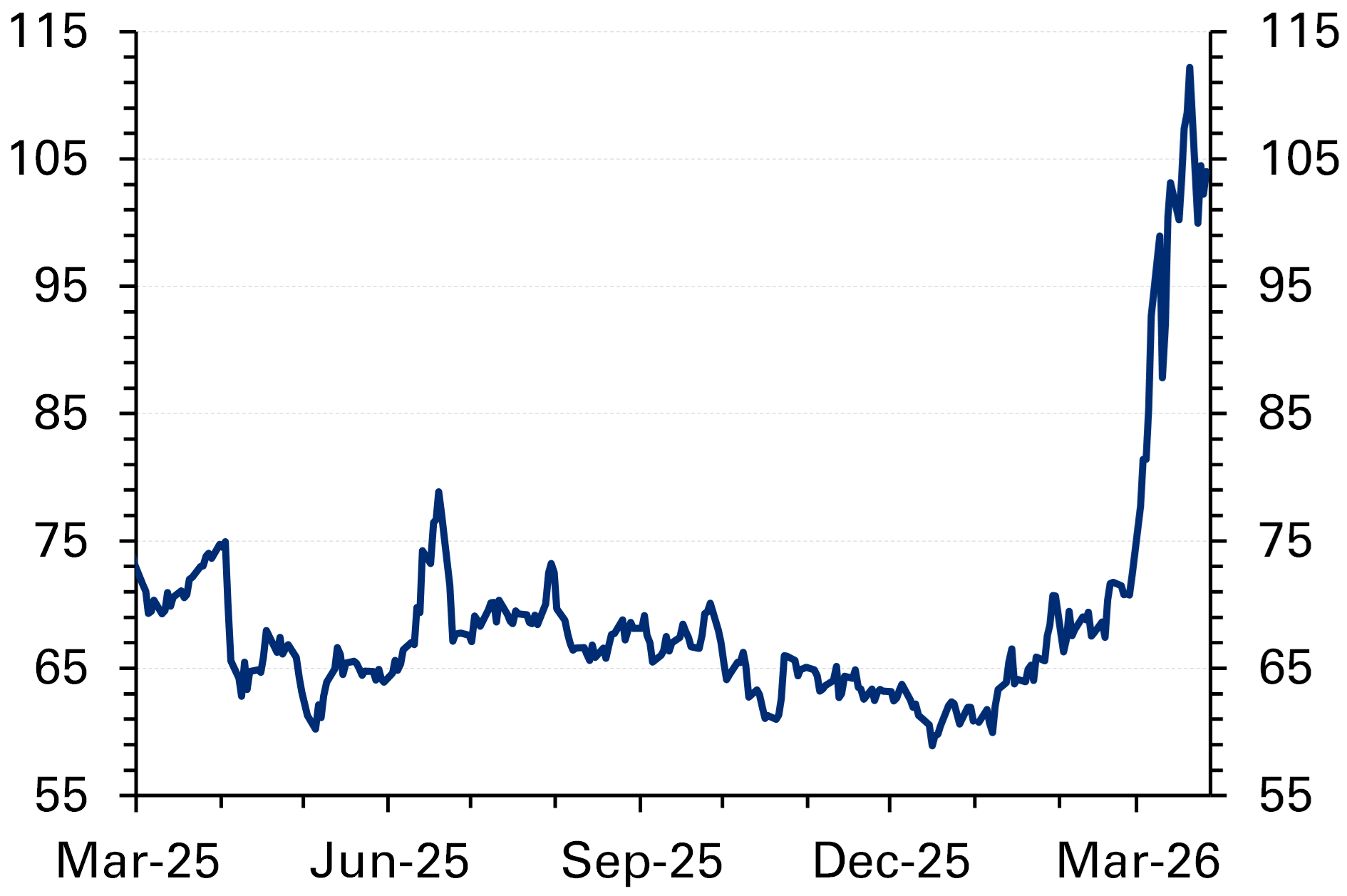
Oil: Prices back on the rise after Iran rejects US ceasefire talks. Brent futures extended their recovery this morning, with prices rising to around $104/bbl (+1.7% d/d) in early Asian trading after Iran’s state broadcaster indicated that the country would reject a US ceasefire proposal. The rebound began yesterday, when reports of the rejection pushed Brent higher after it had fallen by nearly 7% intraday, ultimately settling at $102.2/bbl (-2.2% d/d) by the day’s close. The Iranian statement also outlined a set of conditions deemed acceptable to Tehran for ending the conflict, including a cessation of hostilities across all fronts (Israel’s operations in southern Lebanon are included), guarantees that the US and Israel will not resume hostilities in the future and compensation for war-related damages. These demands stand in sharp contrast to the terms proposed in the White House’s 15-point plan. The gap between the two positions appears significant, suggesting that a near-term resolution remains unlikely. Meanwhile, President Trump’s five-day deadline for potential strikes on Iranian power infrastructure expires on Friday, raising uncertainty over whether the US will pursue further escalation, particularly given the recent pattern of heightened military activity over weekends.
China: Tariff dispute with Mexico deepens amid rising trade tensions. On Wednesday, China released a statement criticizing Mexico’s decision to raise tariffs on a wide range of Chinese imports, arguing that the measures amount to barriers against trade and investment. The higher duties cover more than $30 billion worth of Chinese goods and could lead to an estimated $9.4 billion in losses to several industries, according to the Chinese Ministry of Commerce. Mexico had announced steep tariff hikes back in December—raising duties by as much as 35% on imports from China and other countries that do not have free trade agreements with Mexico. Beijing views the move as Mexico aligning more closely with US trade policy and has suggested it may consider countermeasures to protect its economic interests. The move exposes China to growing North American supply chain realignments, as Mexico attempts to position itself as a preferred hub for US manufacturers. Beijing’s suggestion that it “may consider countermeasures” signals that the dispute risks expanding into a broader tit-for-tat cycle, especially given that China likely perceives Mexico’s actions as being driven more by geopolitical realignment than by economic necessity. Separately, Washington announced that President Trump’s visit to China has been rescheduled for May 14 -15 after being delayed due to the Middle East war.
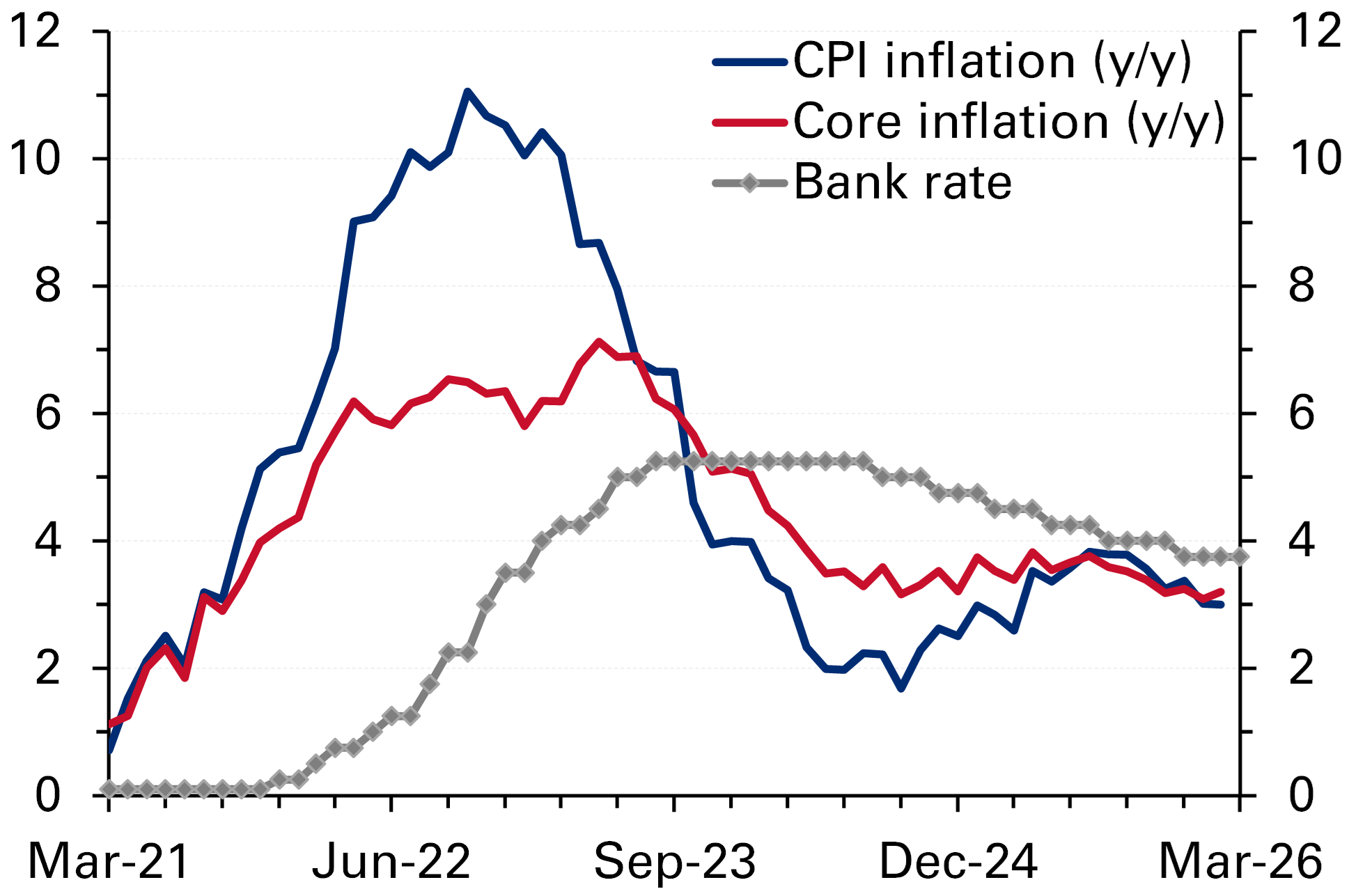
UK: CPI inflation steady in February before the anticipated rise on surging energy prices. CPI inflation in February was steady at 3% y/y, the lowest since March 2025, matching the consensus and BoE forecasts. The core rate inched up to 3.2% y/y from January’s 3.1%, above the BoE forecast of 3%, despite the sticky services inflation rate cooling to the lowest in nearly four years at 4.3% from 4.4%. Looking ahead, obviously, the ongoing war in the Middle East will amplify price pressures for UK consumers. Though the UK’s direct exposure to oil and gas flows through the Strait of Hormuz is insignificant, higher international prices of energy products and the second-round effects on other components will reaccelerate inflation sharply over the coming months. The BoE now projects headline CPI inflation of 3.5% y/y in March and “around 3%” in Q2 versus 2.1% seen in February.
UAE: Credit expansion continued to strengthen in January. Domestic credit growth strengthened to 11.7% y/y in January, up from 11.2% in December 2025, maintaining solid momentum in the pre-conflict period. The private sector remained the main driver of overall credit expansion, accounting for 73% of domestic credit and recording stable growth of 11.2% y/y in both months. Within the private sector, credit to businesses edged higher to 8.4% from 8.3% in December, while personal loans remained a key contributor, rising 15.9% compared with 16.2% in December. Public sector credit (government plus GREs) also accelerated to 12.4% in January, up from 10.3% the month before. On the other side, residents’ deposits continued to exhibit strong double digit growth, rising 17.0% y/y in January, compared with 15.7% in December. Private sector deposits, which make up 75% of resident deposits, expanded by 20.5%, easing slightly from 20.8% in December while public sector deposits rose by 6.5% y/y, sharply up from 1.8% in December. The US–Iran conflict that started in late February is putting pressure on credit conditions by disrupting shipping routes, trade, and energy infrastructure, with companies facing weaker earnings, tighter cash flows, and higher borrowing costs. These disruptions, especially in commercial shipping, are raising uncertainty for both businesses and lenders, making it harder for firms to access financing while increasing credit risk for lenders. The impact of the conflict on domestic credit will only begin to be reflected in March 2026 data.