 +965 2224 8361


Economic Insight
24.03.2026
Estimates from the Central Statistical Bureau reveal that Kuwait’s economy expanded a robust 4.7% y/y in Q3 2025. Non-oil sector growth accelerated sharply, with the hospitality, telecoms, real estate & business activities, and transportation sectors performing especially strongly. Meanwhile, oil GDP logged its first consecutive year-on-year growth reading since early 2023, linked to OPEC policy. We had previously expected GDP growth to accelerate from 2.3% in full-year 2025 to 4.5% in 2026. Clearly however, the growth picture has changed significantly since the onset of the US-Iran conflict in late February 2026, with particular implications for the oil sector outlook.
Non-oil GDP logs best growth reading in four years
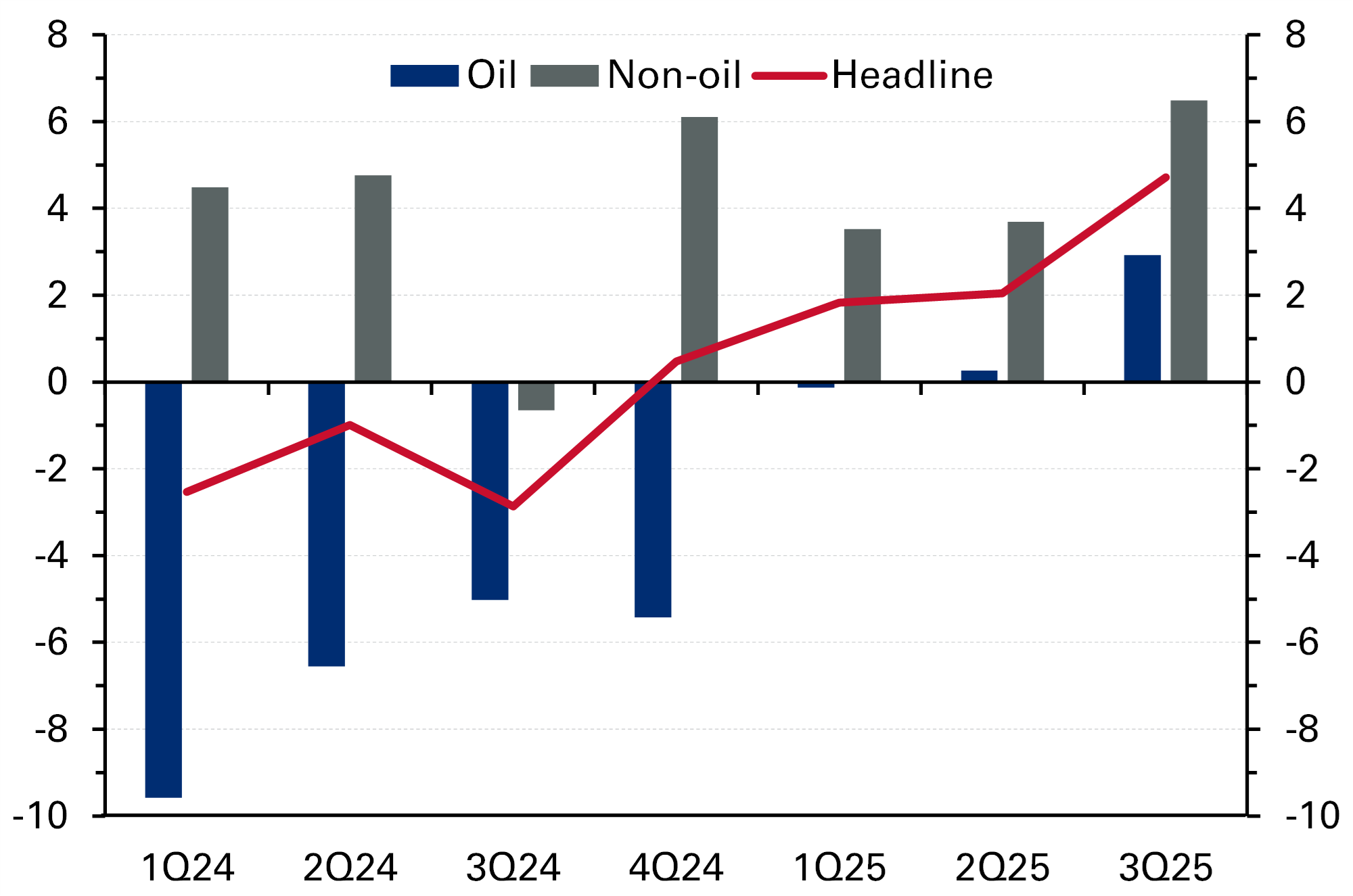
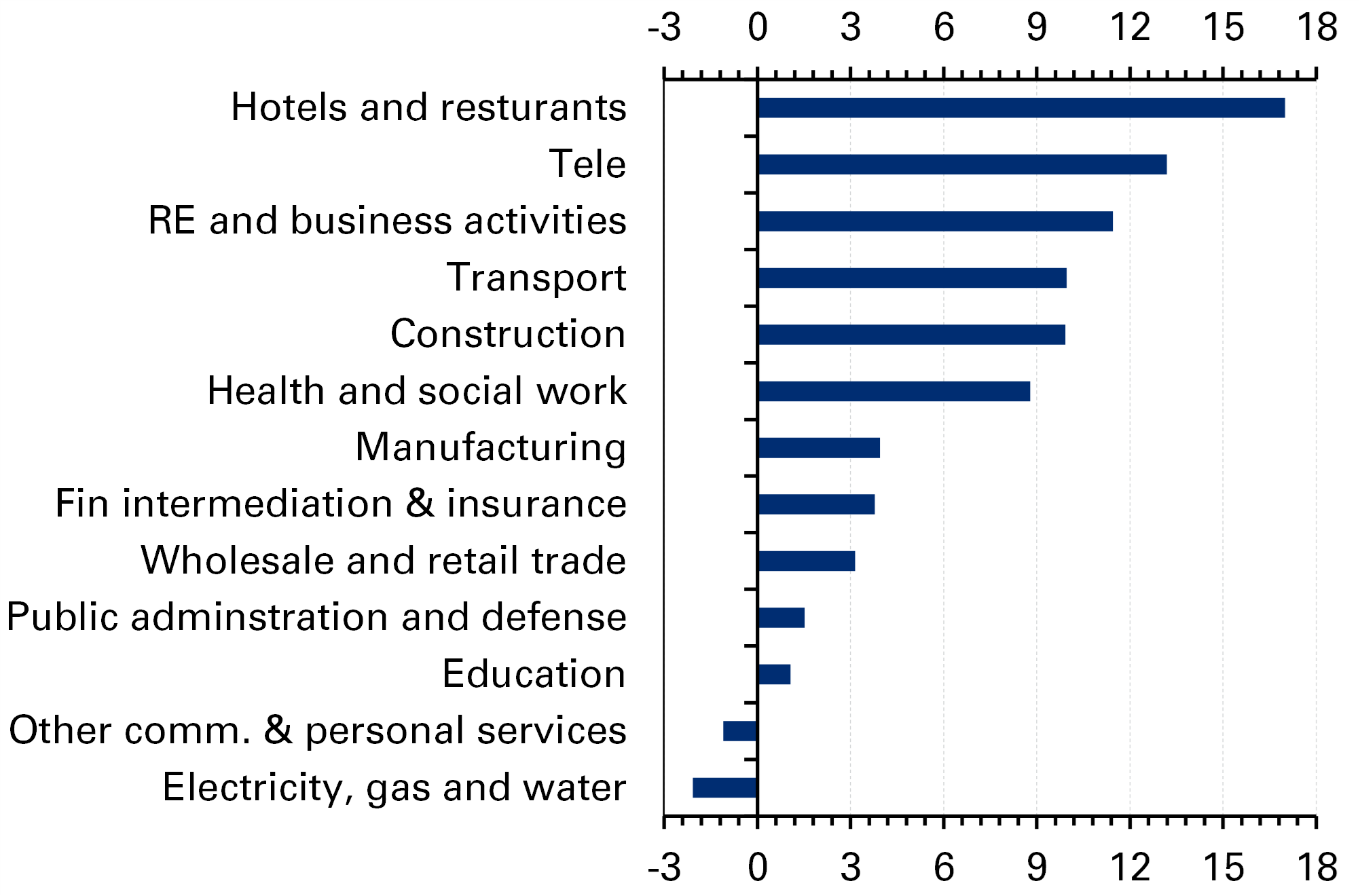
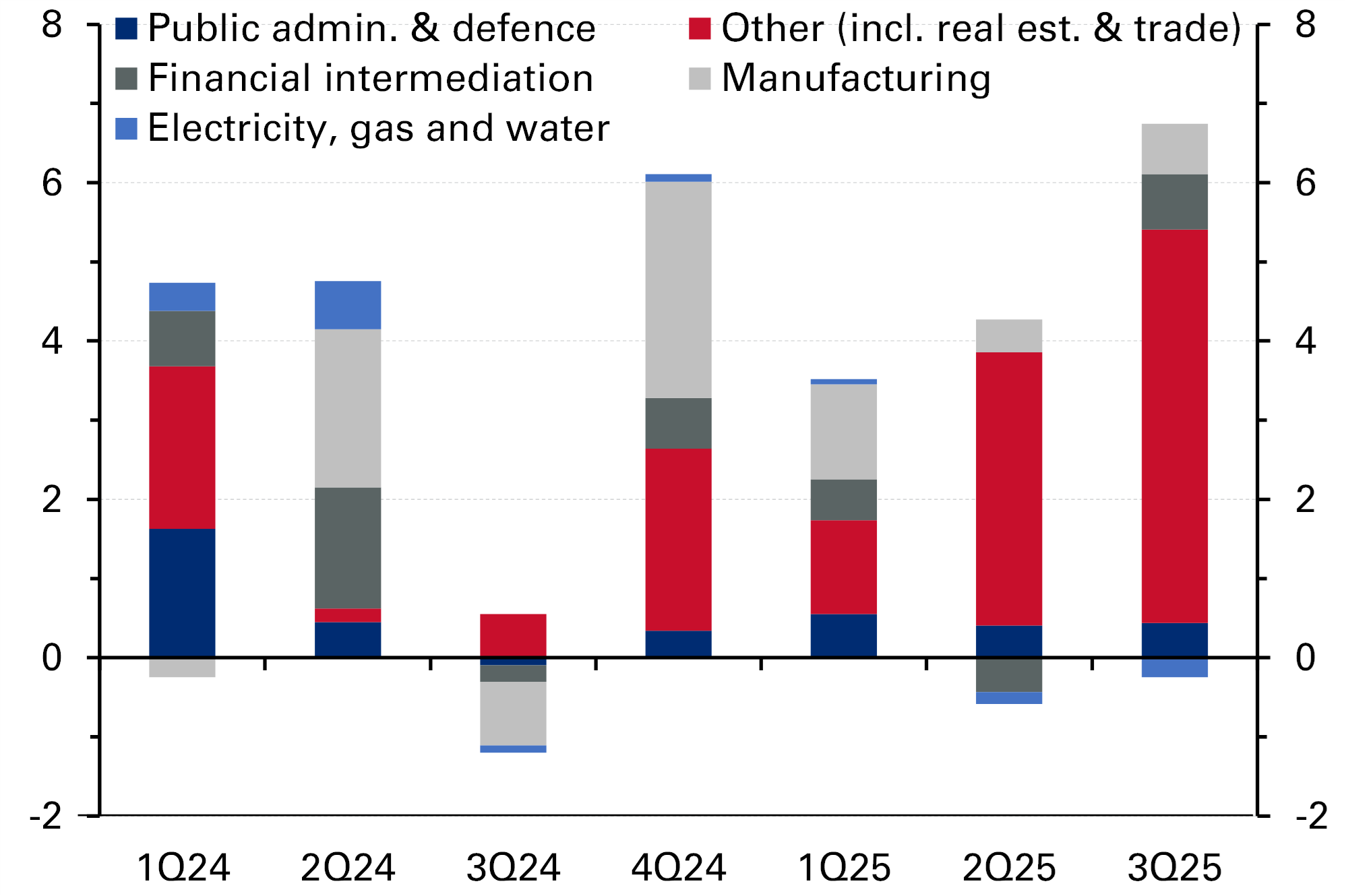
Non-oil growth accelerated to 6.5% y/y in Q3 2025, improving from the upwardly revised 3.7% recorded in Q2 amid robust expansion across most components and partly due to a base effect from a weak reading a year earlier. (Chart 1.) Growth was helped by strong performances in the telecommunications (+13.2% y/y), real estate & business activities (+11.5%), and health & social work (+8.8%) sectors. (Chart 2.) Financial intermediation and insurance, the second largest component of the non-oil economy, jumped 3.8% y/y, recovering from the one-off decline logged in the prior quarter. The stronger activity also included the transportation and the restaurants & hotels categories, which although are smaller as a share of non-oil GDP, posted double digit growth. Meanwhile, the only annual declines were recorded in the electricity, gas & water and other community & personal services sectors while growth in public administration & defence, the largest non-oil component, saw a modest rise.
Oil GDP growth cements return to positive growth as OPEC-8 unwinds earlier output cuts
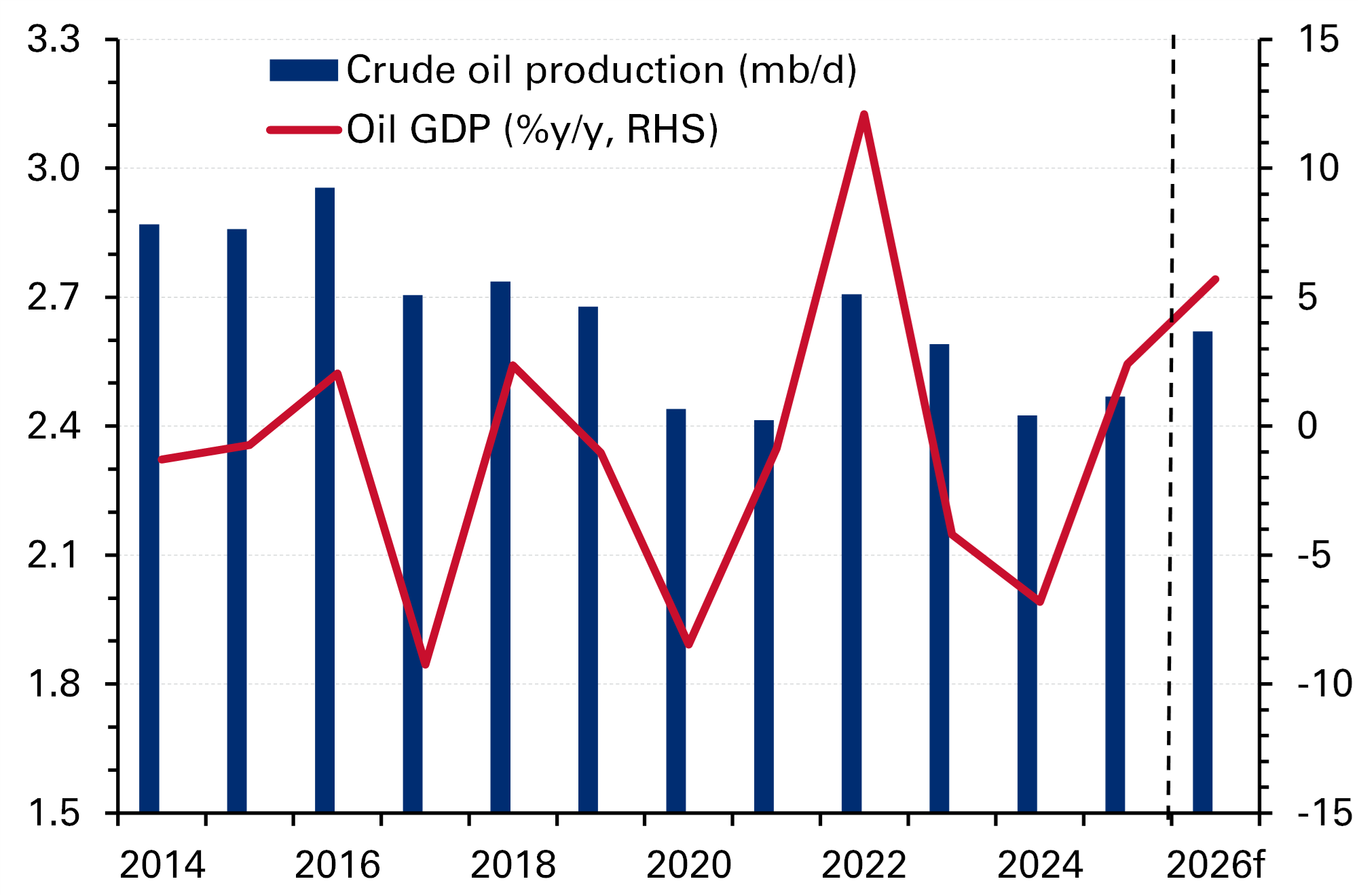
The oil sector expanded 2.9% y/y in Q3 2025, logging the first back-to-back growth readings since Q1 23. The recovery in the oil sector started in April 2025 as OPEC-8 embarked on gradually unwinding a 2.2 mb/d tranche of earlier voluntary cuts, of which Kuwait’s share is 135 kb/d. Official data from OPEC reveal that Kuwait’s average crude production in Q3 25 rose by 70 kb/d to 2.483 mb/d. (Chart 3.) Kuwait continued to hike production into 2025 year-end as OPEC started unwinding another tranche of cuts in Q4 25, under which Kuwait was obligated to cut oil production by 128 kb/d. Therefore, annual growth here should persist into Q4 25.
Overall GDP growth accelerated in Q3, and growth estimates for 2024 and H1 25 also revised higher
Overall GDP rose 4.7% y/y in Q3 2025, buoyed by robust non-oil economic activity and higher crude oil production. The reading marks an acceleration from the upwardly revised 2% print recorded in the previous quarter, but a much stronger improvement from the -2.9% decline seen in the same quarter of 2024 that was linked to a dip in manufacturing and oil production. For Q1-Q3 overall, GDP rose 2.8%, implying upside risk to our previous full-year growth forecast of 2.3%.
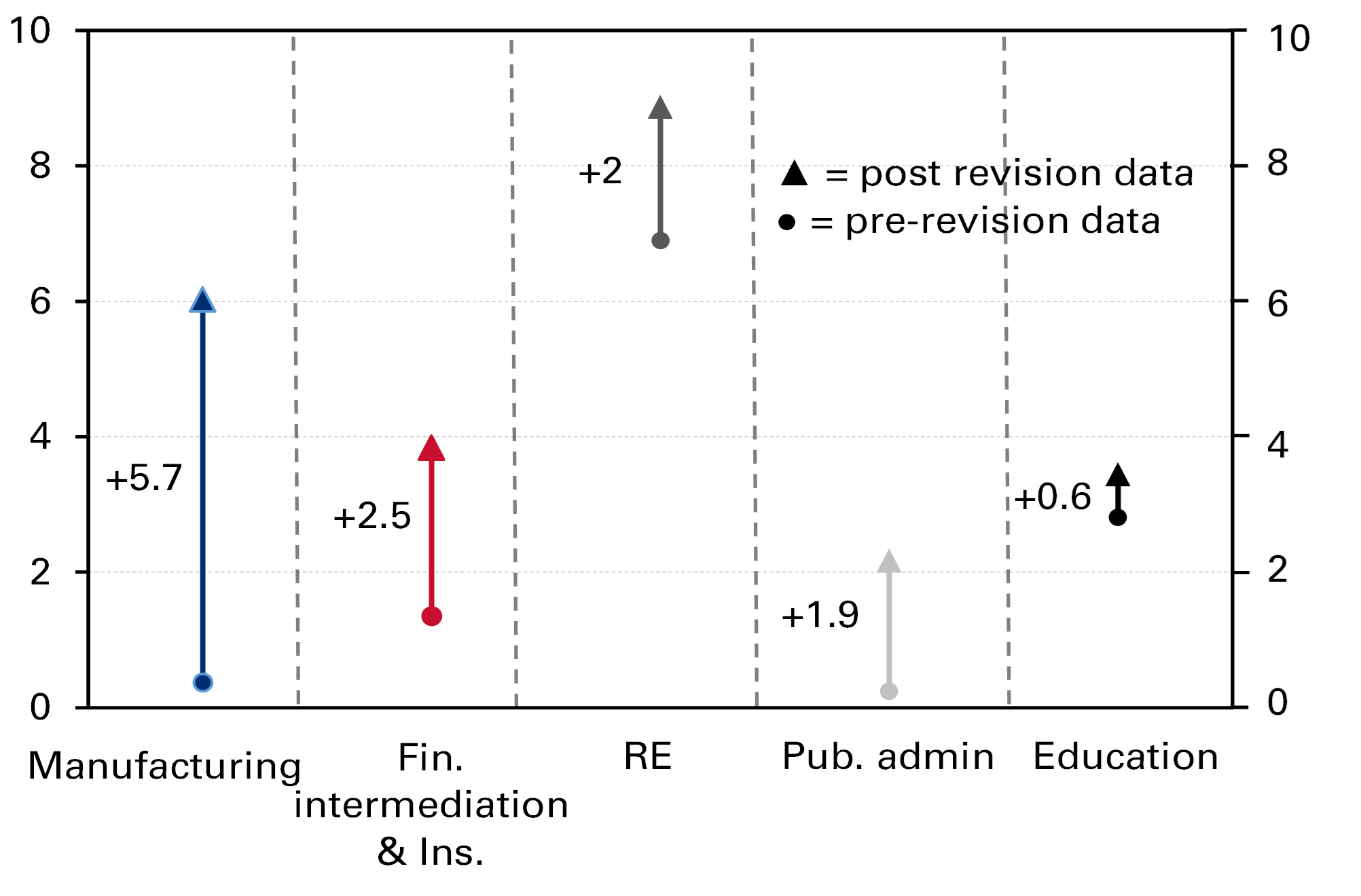
The release also included significant revisions to previous growth data. For 2024, headline GDP growth was revised to -1.5% y/y from the previously reported -2.6%, with estimates for every quarter adjusted higher. (Chart 5.) As a result, GDP is now shown to have returned to positive growth territory in Q4 24 rather than Q1 25 as previously estimated. Upward revisions spanned all sectors, but the most pronounced adjustments occurred in telecommunications (from 4.8% to 13.7%) and manufacturing (from 0.7% to 6.3%), lifting overall non-oil GDP growth sharply to 3.7% from 1.7% previously. Revisions to the oil sector were modest, with output adjusted to -6.7% from -6.9%. For H1 25, the manufacturing sector saw an upgrade from 2.3% to 5.4%, though again improvements were broad-based. These adjustments pushed non-oil growth for the period to 3.6% from 2.6% and overall GDP growth to 1.9% from 1.3%. Taken together, the recent revisions – both in this report and in reports from last year – have been consistently skewed to the upside, indicating Kuwait’s economy has been performing better than initially assessed.
GDP by expenditure shows steep decline in investment in 2024
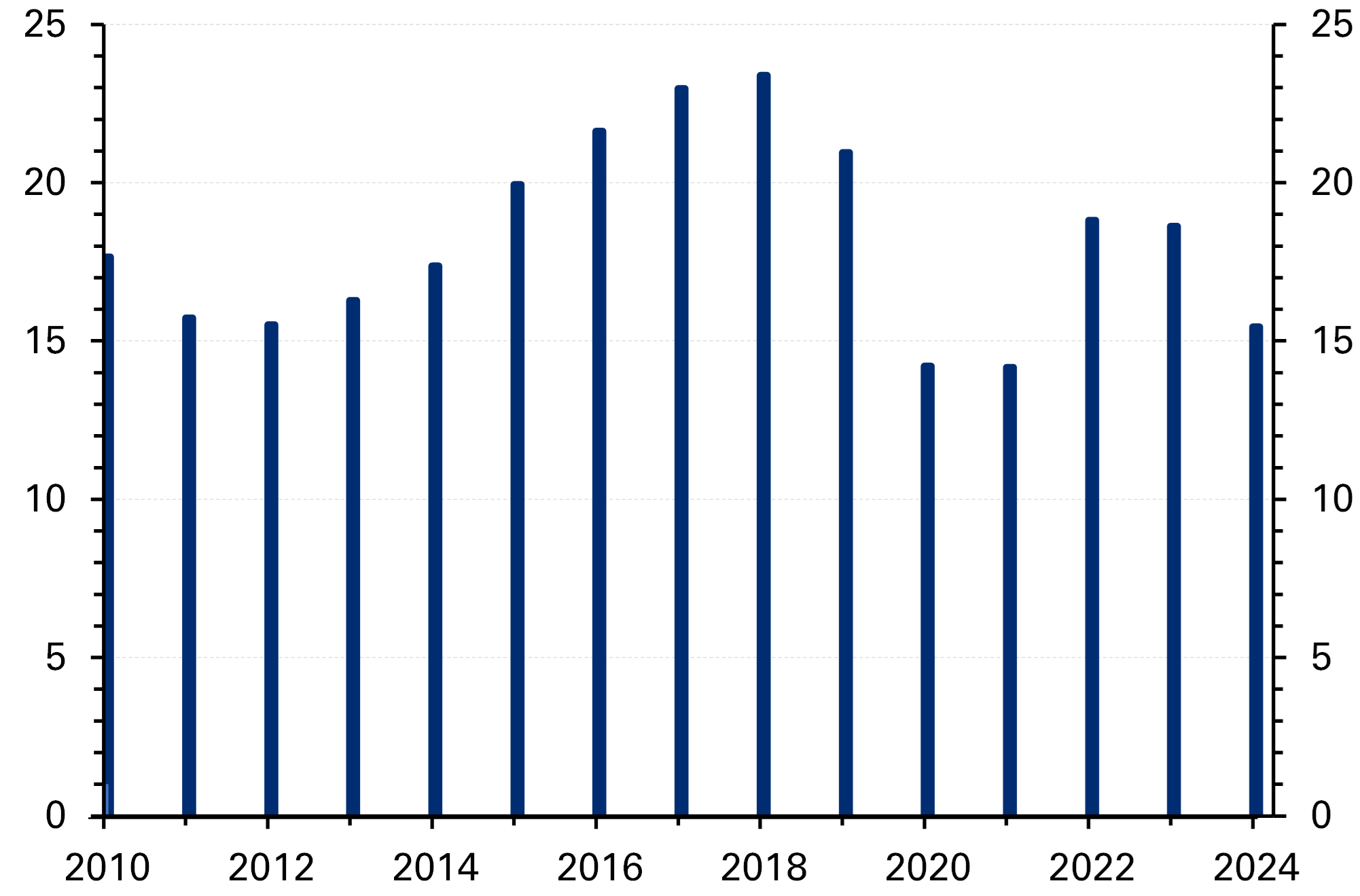
Meanwhile, the latest expenditure-side GDP data provides further insight into Kuwait’s economic performance in 2024, highlighting notable weakness in investment activity. Total investment – in real terms – contracted 18.3% during the year. This drop pushed investment’s share of real GDP to 15%, the lowest since 2010 excluding a pandemic-related trough in 2020-21. (Chart 6.) Private consumption growth was largely steady at 2.6%, while government consumption growth slowed to 2.3% from 4.2% in 2023.
External sector performance also softened, with exports declining 3.2%, reflecting reduced oil export volumes in line with OPEC-related production cuts. For Kuwait to succeed in its reforms and in meeting its economic diversification targets, gross investment will need to increase quite substantially. In this regard, the aforementioned large projects awards and higher budget allocation for capex in the year ahead are a promising start and we expect performance to have improved substantially since 2024.
Middle East conflict injects major uncertainty to the growth outlook
Looking ahead, the recent geopolitical turmoil has shifted the formerly upbeat domestic economic outlook to one of prolonged uncertainty. Previously, a pickup in the government’s reform drive, including larger spending on capital projects such as the Al-Zour IWPP phases 2&3, Mubarak Al-Kabeer port phase 2, and Kabd wastewater treatment plant – all valued at KD1 billion each – were pointing to a strong government intent to accelerate development projects, underpinning an improving outlook. The government’s draft budget for FY26/27 included a 37% b/b increase in allocated capital expenditures to KD3.1 billion, a level unseen since 2021. Meanwhile, interest rates fell by a further 50 bps in H2 25, supporting already strong credit growth and the consumer sector more broadly. The current regional conflict however looks set to weigh on Kuwait’s economic prospects, and especially those of the oil sector given the halt to exports, production shut-ins and oil price volatility.